

Enter The Myth Lab
guy who's only read Joan Didion all summer: I'm getting Joan Didion vibes from this

I am informed for the second time, first by my partner and now by author Brent L. Smith, whose book Pipe Dreams on Pico is available for sale at a table behind us alongside other selections from Far West Press, that the institution now known as the 2200 Arts + Archives, home of the Poetic Research Bureau, was once The Bootleg Theatre.
Tonight the observation seems particularly apropos as the atmosphere more closely resembles that of a music show than of a literary reading. Apropos, as the Poetic Research Bureau is redolent with multicolored lights in jewel tones and clear balloons, to celebrate the launch of Jack Skelley’s newest collection Myth Lab. Apropos not only because of Skelley’s own rock and roll adjacency, but because of his meteoric resurgence, as Siena Foster Solits put it in her stage adaptation of The Complete Fear of Kathy Acker, “among hot 20 somethings in 2023.” That meteoric star shows no signs of going gentle into any goodnight anytime soon, excluding perhaps the post-coital.
Skelley’s newest work, Myth Lab, explores what he calls theories of plastic love: vignettes reminiscent of Didion’s White Album in their observational timbre, and reminiscent of Vonnegut in their postmodernist, speculative subject matter. Rather than exploring the origins of the 2, the design choices of the Getty Villa, or the fictional island of San Lorenzo, Skelley’s theories deal with bodies. Bodies in sex, in love, in progress, in transcendence, in transgression.
I think a lot about transgression: what it means and what it does not. True transgression, to me, comes not from deliberate offense– from saying the most heinous thing one can think of for the mere sake of doing so. In fact, this quality is precisely the thing that sours transgression into what I call attempted shock value.
Skelley’s transgressiveness in Myth Lab is not one of deliberate offense– precisely its opposite. Myth Lab is sexy, rapturous, affecting a kind of futurism less concerned with the speculated technological capabilities of future sex dolls, and more with The Dolls. It worships in explicit sexuality, without veering into fetishism. Where it does dip into a particularly sex-forward wonderment, it is the wonder at the being–the humanity– of another body, rather than its otherness.
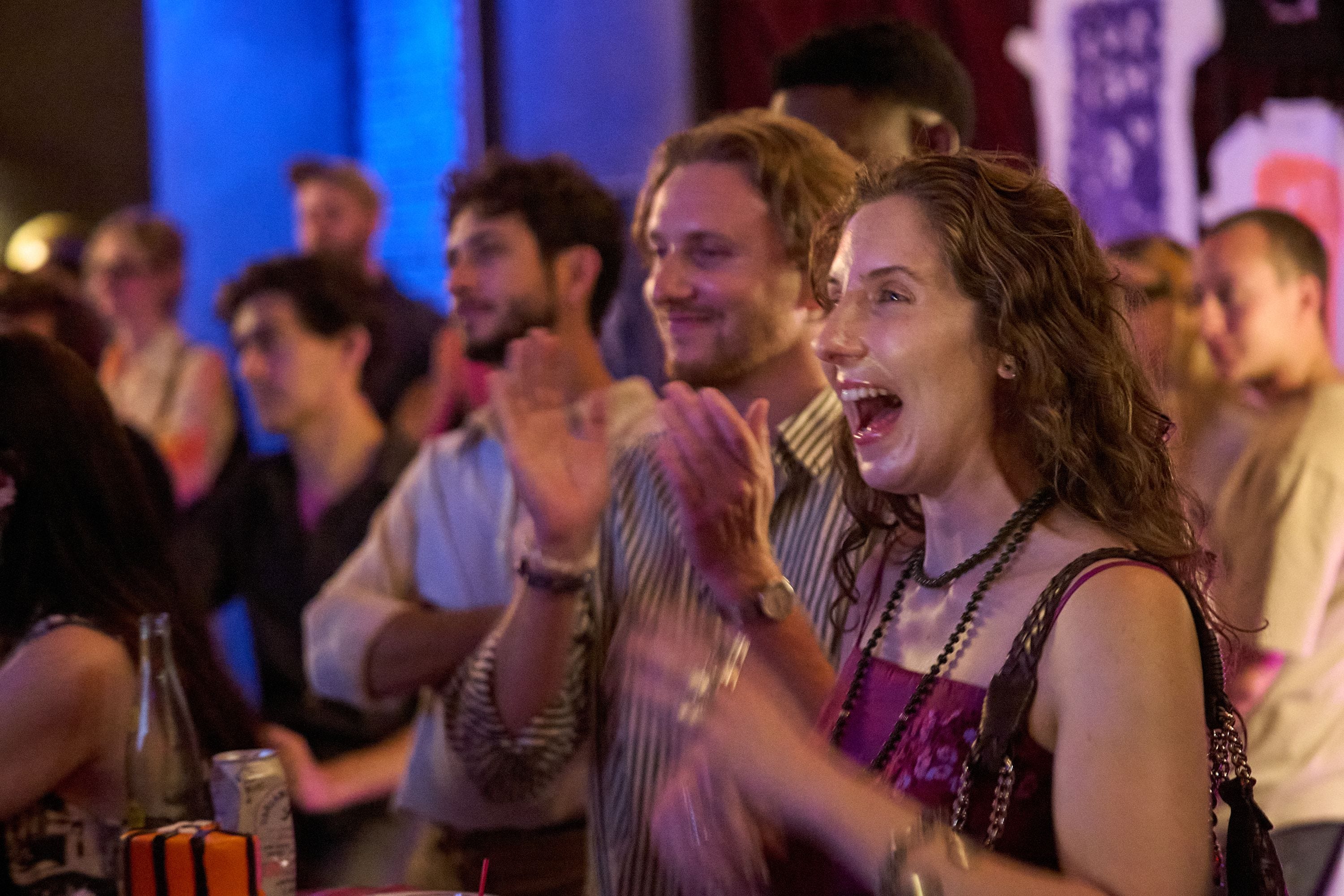
Myth Lab affects a particular futurism that, rather than yearning for some caricature of the traditional, embraces the humanism of bodies in modification. A kind of futurism which celebrates, rather than distances, humanity. The loving of the body transgressive. The body politic, flipped onto its stomach. The bodypossible.
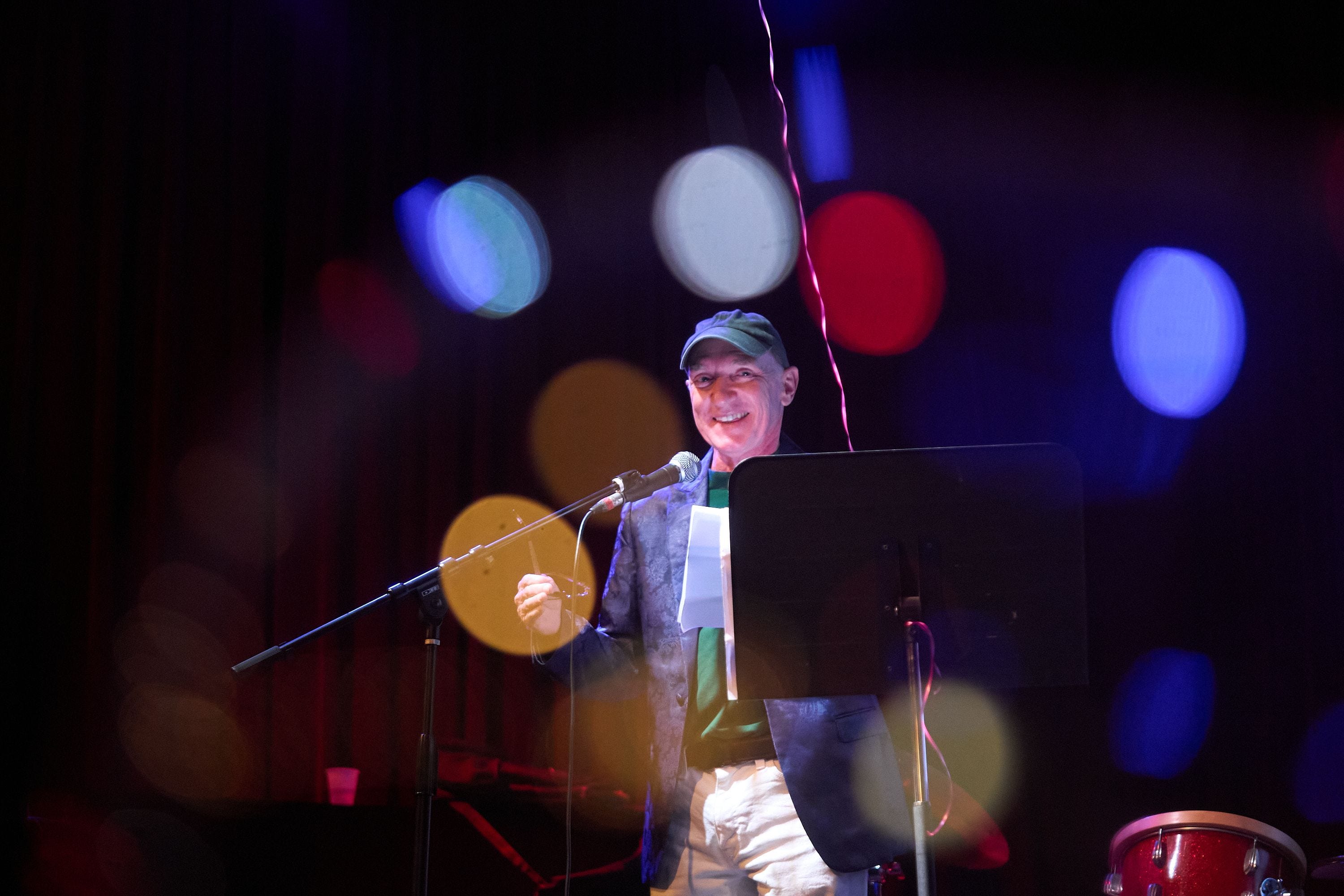
The launch event at the Poetic Research Bureau, hosted by Currant Jam, featured readers Sammy Loren, Lily Lady, and Adult Book Club, as well as an interactive performance by Volta Collective, a dramatization of one of Myth Lab’s vignettes.Introductions and plans to end the night at Harvard and Stone were made. John Tottenham pointed himself out to me on the cover of Parker Love-Bowling’s Rhododendron. I left with a copy of Rhododendron, also published by Far West Press, and a sense of renewal. After a summer during which LA’s alt-literati largely expatriated to New York, the roomful of hugs and hellos bubbled with sincere effusion, evanescent in the sticky, late summer air.
excellent! your writing is so transportive, drawing the space up around the reader. wish i’d been able to be there 🤧